

Zelda 35th Anniversary: Why Zelda is Nintendo’s Star Wars
Zelda 35th Anniversary: Why Zelda is Nintendo's Star Wars
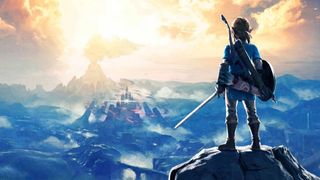
This by week, The Legend of Zelda celebrated its 35th anniversary. Whatever series that lasts that long must have something special going for it. Why has the Zelda series captured our imaginations and never let become, when so many other early on NES franchises have disappeared into the mists of gaming history?
Function of the answer lies in the games themselves. Ever since the very beginning installment, Zelda games have combined satisfying gainsay with clever puzzles, and explorable overworlds with stray dungeons. Zelda games oft take memorable music and gorgeous graphics. And withal, you could say the same thing about plenty of other series, from Dragon Age to God of War. What makes Zelda, specifically, feel like a timeless cultural institution?
- Play the all-time Nintendo Switch games
- The Legend of Zelda games, ranked
Subsequently thinking it over, I've come to the conclusion that "cultural" is the operative discussion in that judgement. Zelda feels distinctly different from other video game stories considering it's non structured like a video game story. It's structured like a story that humans have been telling ourselves over and over since the dawn of our species: the monomyth. And if "monomyth" doesn't sound familiar, don't worry: You've heard information technology, likewise, probably more times than you realize.
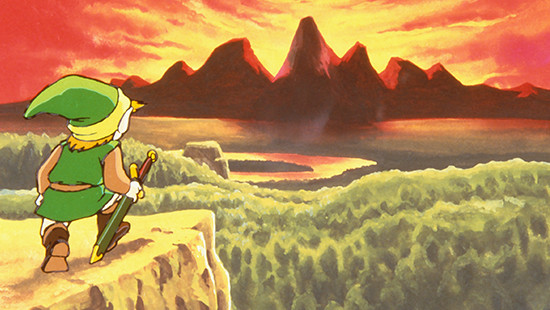
What is the monomyth?
To compress an entire academic field into a few sentences: The monomyth, also called the Hero's Journeying, was codification by literary theorist Joseph Campbell back in 1949. His seminal volume, "The Hero With a Thousand Faces" (Pantheon Books, 1949) argued that human being cultures tend to tell the aforementioned story over and over again, particularly in dealing with mythic figures.
According to Campbell, this is the basic story construction for the monomyth:
"A hero ventures forth from the earth of common day into a region of supernatural wonder: fabled forces are in that location encountered and a decisive victory is won: the hero comes dorsum from this mysterious adventure with the power to bestow boons on his swain human."
Phrased like that, information technology sounds pretty simple. And still, this is arguably one of the nigh powerful tools in literary analysis. This is non only the story of Gilgamesh and Odysseus; it's also the story of Rama, Yamato Takeru, King Arthur, Beowulf, Moses and Jesus. It's the story of Bilbo Baggins and Luke Skywalker. And, yes, it's the story of Link, too.
Campbell outlines 17 steps in the Hero'due south Journey, divided into 3 master phases. In the Departure, the hero crosses the threshold betwixt the mundane globe and the magical world. In the Initiation, the hero faces many trials as he learns to navigate his new surroundings. Finally, in the Return, the hero confronts a final ordeal, and returns to the mundane world with new knowledge to share.
Information technology sounds broad, merely the individual steps are surprisingly specific — and just well-nigh every "ballsy" story really does follow them, from The Wizard of Oz, to The Lord of the Rings, to Dune. (George Lucas actually hewed so closely to the Hero's Journey in creating Star Wars, that he invited Campbell to watch the movies with him. Not only did Campbell accept, but he loved the films!)
There'south much, much more than to say nearly the Hero'southward Journeying — particularly its "character archetypes," which were inspired by Carl Jung's psychological research — only for the moment, I'll merely affirm that the most memorable Zelda narratives fit neatly into the monomythic construction. This is why Zelda "feels" dissimilar from nigh video games — and, peradventure, why we're still clamoring for more, 35 years later.
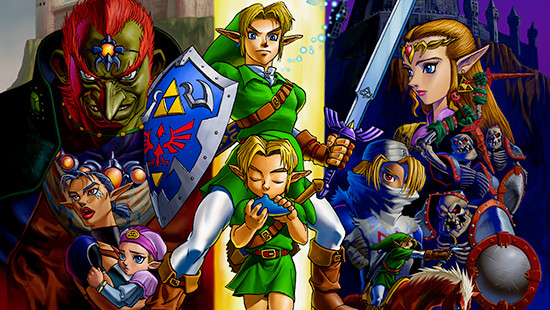
Link and the Hero's Journey
With well-nigh 20 mainline Fable of Zelda titles to choose from, it'd be difficult to list every unmarried instance in which Link's adventures mirrored Campbell'south structure. To simplify, then, permit'south examine The Legend of Zelda: Ocarina of Time. This N64 game from 1998 is arguably the most influential game in the series, creating a template for 3D activity/adventure games that's notwithstanding in use today. It also fits Campbell'south construction almost to a T.
- Telephone call to Risk: Navi the fairy appears, urging Link to visit the Swell Deku tree.
- Refusal of the Telephone call: At first, Link refuses to wake upwardly for Navi.
- Supernatural Aid: The Not bad Deku Tree grants Link Kokiri'south Emerald.
- Crossing the First Threshold: Link leaves the enchanted Kokiri Forest.
- Belly of the Whale: Link crosses a dark, narrow bridge betwixt Kokiri Forest and Hyrule Field.
- The Road of Trials: Link gathers the Spiritual Stones, coming together friends and besting foes along the way.
- Coming together with the Goddess: Princess Zelda gives Link the Ocarina of Time.
- Woman as the Temptress: Link discovers that he can reverse time by giving up the Primary Sword.
- Atonement with the Father/Completeness: Ganon taunts Link in the Forest Temple.
- Apotheosis: Link conquers Hyrule's dungeons and gathers all 6 Sage Medallions.
- Ultimate Boon: Zelda bestows the Calorie-free Arrows upon Link.
- Refusal of the Return: Link (manifestly) fears to lose Navi and Zelda subsequently Ganon's defeat.
- Magic Flying: Link and Zelda escape from Ganon's crumbling castle.
- Rescue from Without: The half-dozen Sages bind Ganon and end Link's boxing.
- Crossing of the Return Threshold: Zelda uses the Ocarina of Fourth dimension to return Link to the past.
- Master of Two Worlds: This time, Link fully understands his lineage, Zelda'south powers and Ganondorf's treachery.
- Liberty to Live: Link and Zelda can thwart Ganon's plans in advance; Hyrule remains peaceful.
There are other means to interpret many of these steps, of grade. Link is literally in the abdomen of a whale when he braves Lord Jabu-Jabu'due south stomach. Link physically returns across a threshold when he arrives at Kokiri Forest in the end.
Furthermore, some of the steps don't fit neatly in a game with a silent protagonist. Link never meaningfully refuses the call to adventure, and no woman (metaphorical or otherwise) ever tempts him away from it. Link has no "begetter figure" to speak of, and little meaningful interaction with Ganon before the final level.
However, the point is not that every Zelda story checks every box of the monomyth. The betoken is that the monomyth is a perfectly viable framework for not just one Zelda adventure, but well-nigh xx of them. Link is called to hazard when his uncle bestows a sword on him; Link is called to adventure when his grandmother gives him the Hero's Tunic; Link is chosen to adventure when he awakens from stasis and sees a cleaved Hyrule stretched out before him. In that location's always a moment of Embodiment when he gathers the doodads; there's ever an Ultimate Boon when he gets the item that beats the final boss; there's always Freedom to Live after Link bests Ganon and sets things correct.
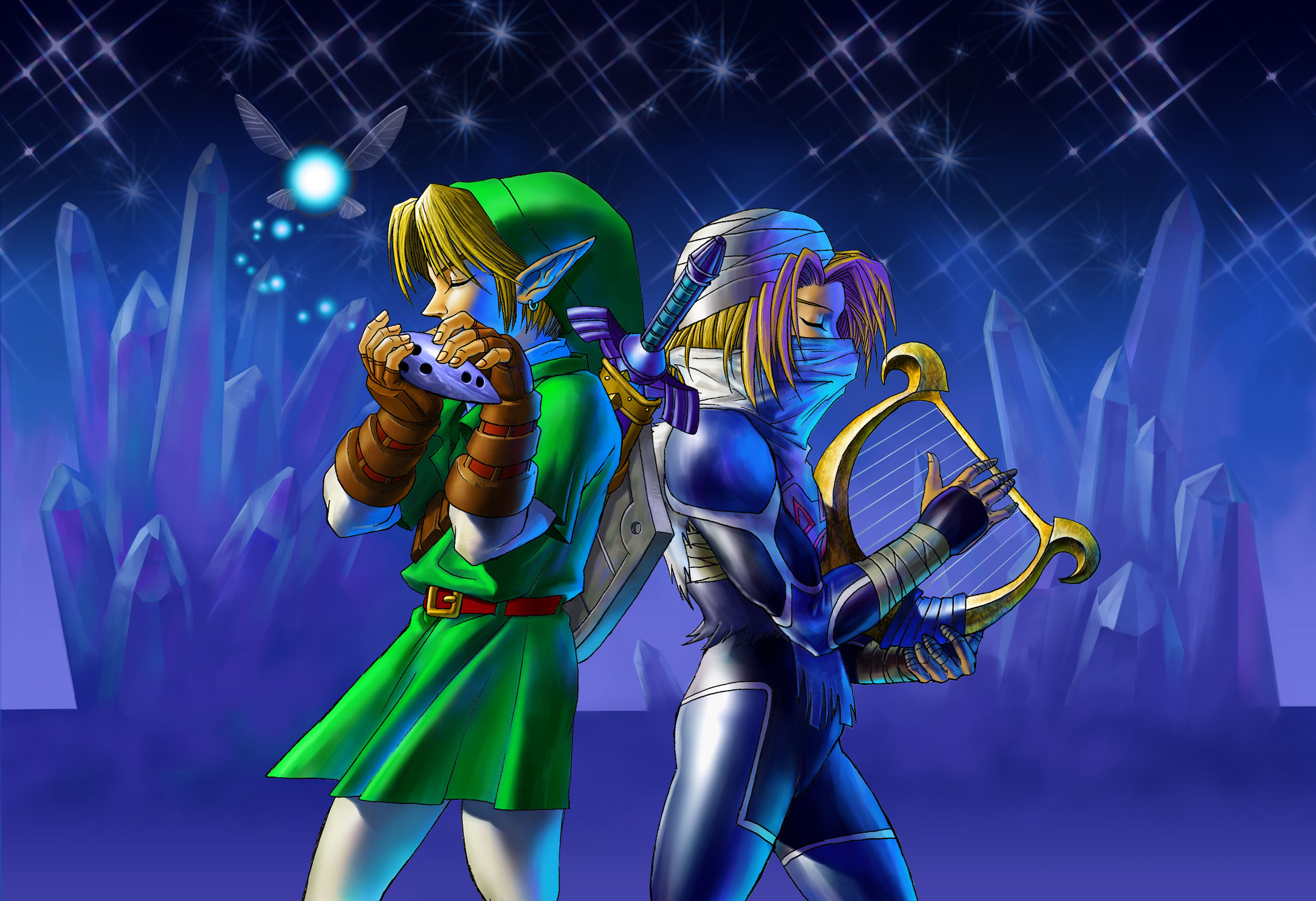
A timeless myth
None of this is to say that The Legend of Zelda is a flawless serial or that the monomyth is the but viable way to tell a story. Rather, the monomyth is a lens through which we can empathize some of humanity's most central storytelling instincts, and the Zelda serial is a perfect example. From the epic poems of antiquity to the most complex reckoner games, humans dear a skillful yarn most a reluctant hero who sets out for adventure, acquires supernatural powers, conquers trials and returns home a changed man. This has happened to Link almost 20 times — and I'd wager that most fans are gear up to see information technology happen 20 more.
In that location'south a long-running fence about whether video games count as fine art, and to annotate on it would be above my pay grade. But the Zelda games are a strong argument that video games can count as myth — and if that's truthful, and so the "Legend" in the title is well-earned.

Source: https://www.tomsguide.com/news/zelda-35th-anniversary-heros-journey
Posted by: polkthle1946.blogspot.com
0 Response to "Zelda 35th Anniversary: Why Zelda is Nintendo’s Star Wars"
Post a Comment